
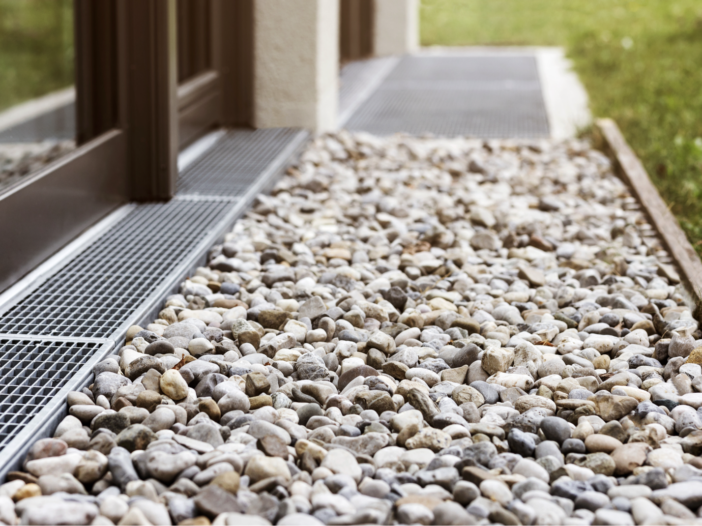
If part of your yard turns into standing water after every heavy rain, or water is pooling near your foundation, french drain installation is one of the most reliable, proven solutions available. It’s not a new idea — the basic concept has been used for well over a century — but it remains one of the most effective ways to intercept and redirect groundwater before it becomes a bigger problem. If you’re dealing with a chronically wet yard anywhere in Montgomery County or the surrounding region, understanding how a french drain actually works helps you have a much more informed conversation with whoever ends up installing it.
We design and install drainage systems, including french drains, for homeowners across Montgomery County, Bucks County, and the greater Southeastern Pennsylvania region, and it’s one of the services we get asked about most as clay-heavy soil and heavier storm patterns cause more yards to hold water than they used to. Here’s what to know before you commit to a project.
What a French Drain Actually Does
A french drain is a trench filled with gravel or rock containing a perforated pipe that redirects surface and groundwater away from an area where it’s pooling or causing damage. Rather than trying to stop water from entering the ground, a french drain works with gravity, collecting water that seeps into the trench and channeling it to a safer discharge point — typically a storm drain or a lower point on the property where standing water isn’t a problem.
Signs You Might Need a French Drain
A few common warning signs suggest a french drain installation might solve a drainage problem that’s been getting worse over time:
- Standing water in your yard more than a day or two after a storm, especially in the same low spot every time
- Water pooling near your foundation, which can lead to basement seepage or long-term structural concerns
- A consistently soggy or muddy section of lawn that struggles to grow grass no matter what you try
- Erosion or runoff patterns that carve visible channels across a slope after heavy rain
- A retaining wall or hardscape area showing signs of water pressure buildup, such as bulging, cracking, or staining
If any of these sound familiar, it’s worth having a drainage assessment before the problem worsens or causes damage to your foundation, lawn, or hardscaping.
How French Drain Installation Works
A properly installed french drain follows a fairly consistent process, though the specifics depend on the site:
- Assessing the water source and desired discharge point. Understanding where the water is coming from and where it needs to go is the most important step, since a poorly planned discharge point can just move the problem somewhere else on the property.
- Digging the trench at a slight, consistent downward grade — even a small error in slope can prevent the system from draining properly.
- Lining the trench with landscape fabric, which keeps soil from infiltrating the gravel and clogging the system over time.
- Placing the perforated pipe and surrounding it with drainage gravel, allowing water to enter the pipe from multiple points along its length.
- Backfilling and finishing the surface, either with soil and grass for a fully buried system or with visible gravel for a decorative, functional drainage channel.
Skipping proper grading, fabric, or gravel sizing is where a lot of DIY or poorly executed french drains end up failing within a few years, often clogging with sediment or losing their slope as soil settles.
Why Montgomery County Properties Often Need This Solution
Montgomery County’s clay-heavy soil doesn’t drain the way sandier soil does, which means water that would soak in elsewhere tends to sit on the surface or move slowly through the ground here. Combined with the rolling terrain found in many neighborhoods, water often collects at the base of a slope or against a foundation wall rather than draining away naturally.
Older homes in particular sometimes have grading that has shifted over decades of settling, which can quietly redirect water toward a foundation that was originally graded correctly. A french drain, especially combined with corrected surface grading, is often the most effective way to address this kind of long-standing drainage issue without major excavation near the house itself.
French Drain vs. Other Drainage Solutions
French drains aren’t the only drainage fix, and it’s worth understanding where they fit compared to alternatives. Surface swales work well for larger, more gradual water movement across open yard space but don’t address water that’s already collecting in a specific low spot. Sump pump systems handle water that’s already made it into a basement, which is a different problem than intercepting water before it reaches the house.
In many cases, an effective drainage plan combines more than one of these approaches rather than relying on a french drain alone — which is part of why a proper site assessment matters more than picking a single fix off a list.
What to Expect From a Professional Installation
A dependable drainage contractor should walk the property with you, identify where water is coming from and where it’s causing problems, and explain the plan before any digging starts. Pricing depends on trench length, depth, soil conditions, and the discharge solution needed, so a generic online cost estimate is rarely accurate for a specific yard. A free, in-person consultation with a direct quote is the most reliable way to understand what a project will actually cost and how long it will take.
Key Takeaways
- French drain installation collects and redirects groundwater away from problem areas using a gravel-filled, perforated pipe trench.
- Common warning signs include standing water, soggy lawn patches, foundation seepage, and erosion channels after storms.
- Proper installation depends heavily on correct trench slope, landscape fabric, and gravel sizing — shortcuts here are the most common cause of failure.
- Montgomery County’s clay-heavy soil and rolling terrain make drainage issues more common here than in areas with sandier, flatter ground.
- French drains often work best as part of a broader drainage plan that may also include grading corrections or surface swales.
FAQ
How much does french drain installation typically cost? Cost depends on trench length, depth, soil conditions, and the discharge point used. A free, on-site consultation is the most accurate way to get pricing specific to your property.
How long does a french drain last? A properly installed french drain, with correct grading and fabric, can last for decades, though it can fail sooner if built with the wrong slope or without proper fabric to prevent clogging.
Will a french drain fix a wet basement? It can help if the water source is groundwater intercepted before it reaches the foundation, but an already-wet basement may need an interior solution like a sump pump in combination with exterior drainage work.
Can I install a french drain myself? It’s possible for a small, simple project, but getting the slope, fabric, and discharge point right is where most DIY attempts run into trouble. A professional assessment helps avoid a system that looks right but doesn’t actually solve the problem.
Dealing with standing water or a soggy yard that never seems to dry out? Our drainage team has installed french drains and broader drainage solutions throughout Montgomery County, Bucks County, and the greater Southeastern PA region. Request a free consultation and we’ll assess your property and provide a straightforward, upfront quote.
Leave a Reply