
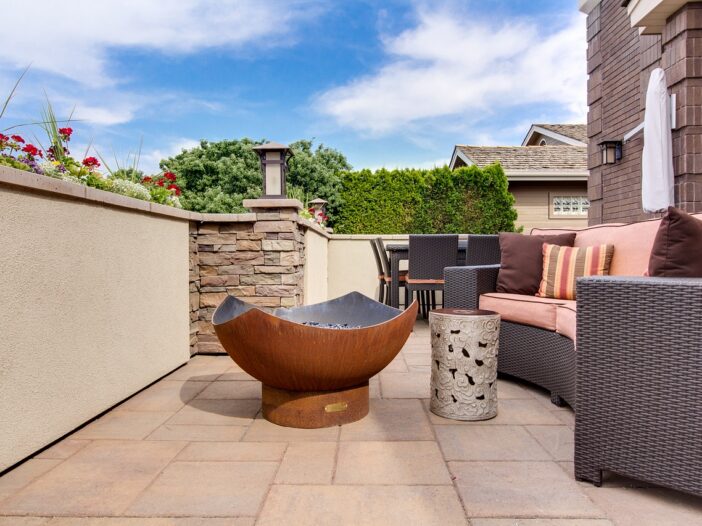
Once you’ve decided to build a patio, one of the first real decisions is material — and the paver patio vs concrete patio question is the one we get asked about most often. Both are solid, proven options, and both can look great in the right setting. But they behave differently over time, cost differently upfront, and suit different types of homes and budgets. If you’re planning a project in Bucks County or anywhere across Southeastern Pennsylvania, it’s worth understanding the real differences before you commit.
We’ve installed both materials across hundreds of residential projects, and the honest answer is: there’s no single “better” choice. There’s a better choice for your yard, your budget, and how you plan to use the space. Here’s how they compare.
Upfront Cost: Paver Patio vs Concrete Patio
Concrete is generally the lower-cost option upfront. A poured concrete slab requires less labor-intensive installation than laying individual pavers one at a time, which keeps material and labor costs down for straightforward, simple shapes.
Pavers typically cost more per square foot, both in materials and installation labor, since each unit is set individually over a compacted base and sand or polymeric jointing sand. That said, the price gap narrows on more complex concrete designs — stamped or stained concrete, decorative borders, or curved edges can push concrete pricing close to paver territory.
If budget is the primary driver and your patio design is a simple rectangle or square, concrete often wins on initial cost. If you want more design flexibility without paying for elaborate concrete finishing work, pavers can be more cost-effective than you’d expect.
Durability and How Each Material Handles Our Winters
This is where the decision gets more interesting for Bucks County homeowners specifically, because our winters put real stress on outdoor hardscaping.
Concrete is poured as a single continuous slab, which means it has no natural expansion joints beyond the ones cut into it during installation. When water gets into small cracks and freezes, it expands — and over several winters, that freeze-thaw cycle can create larger cracks, especially if the original base wasn’t compacted and drained properly.
Pavers are individual units with small joints between them, which actually gives the whole surface a bit of flex. That flexibility tends to handle freeze-thaw movement better than a single rigid slab, and if one paver does crack or shift, it can be pulled and replaced without redoing the whole patio. Concrete, on the other hand, usually needs the whole section replaced or professionally patched if it cracks.
For a region with real winters like ours, this is a meaningful factor — not just a marketing point for one material over the other.
Repair and Maintenance Over Time
Maintenance needs differ quite a bit between the two:
- Concrete needs periodic sealing to resist staining and moisture penetration, and cracks — when they happen — are more visible and harder to blend in in seams.
- Pavers need occasional joint sand replenishment and can shift slightly over years, which sometimes calls for minor releveling. Individual damaged pavers are simple to swap out.
- Both benefit from routine cleaning to prevent moss, algae, or weed growth in joints or control cuts, especially in shadier Bucks County yards.
If low, hands-off maintenance is your top priority, concrete’s sealing schedule is fairly predictable and infrequent. If you’d rather have an easy, spot-level fix when something eventually needs attention, pavers offer that flexibility.
Design Flexibility and Appearance
Pavers come in a wide range of colors, shapes, and patterns — herringbone, running bond, basket weave — which gives homeowners more design control without a major cost jump. They also mimic the look of natural stone or brick at a lower price point than actual stone.
Concrete can be dressed up with stamping, staining, or exposed aggregate finishes, but these upgrades add cost and require a more specialized installer. A plain poured slab has a simpler, more utilitarian look, which some homeowners prefer for a clean, modern feel — particularly around contemporary home styles becoming more common in newer Bucks County developments.
Which Makes More Sense for a Bucks County Backyard?
There isn’t a universal right answer, but a few patterns tend to hold true for homes in this area:
- If your priority is fitting a tight budget for a simple, functional patio, concrete is often the practical choice.
- If your yard sees serious winter freeze-thaw stress, has some grade or drainage complexity, or you want more design flexibility, pavers tend to perform better long-term.
- If you’re planning to add features like a fire pit, seating wall, or outdoor kitchen, pavers make it easier to integrate those elements into the overall design without seams that don’t match.
Bucks County’s mix of older, established neighborhoods and newer developments means both materials have their place — the right one really does depend on your specific property and goals. You can review Bucks County’s local government resources for permitting and zoning information relevant to residential improvement projects in the county.
Key Takeaways
- Concrete generally costs less upfront for simple shapes; pavers cost more per square foot but offer more design flexibility.
- Pavers tend to handle freeze-thaw winters better due to their flexible, jointed installation; concrete slabs are more prone to cracking over time.
- Damaged pavers can be individually replaced, while concrete repairs are more visible and often require larger patch or replacement work.
- Design options are broader with pavers unless you’re willing to pay for decorative concrete finishing.
- The right choice depends on your budget, yard conditions, and long-term plans for the space.
FAQ
Which lasts longer, a paver patio or a concrete patio? Both can last decades with proper installation and maintenance. Pavers often handle freeze-thaw cycles and settling better, while concrete’s lifespan depends heavily on the quality of the base and control joints installed.
Is a paver patio more expensive than concrete? Typically yes, on a per-square-foot basis, though the gap shrinks if you choose a decorative concrete finish over a basic poured slab.
Can I add a fire pit to either type of patio? Yes. Both materials can accommodate a fire pit or seating wall, though pavers often make it easier to integrate custom shapes and add-ons into the existing design.
Do paver and concrete patios need a permit in Bucks County? Requirements vary by township, so it’s worth checking with your local municipality before starting a project.
Still deciding between a paver patio vs concrete patio for your own backyard? Our design and build team has installed both across Bucks County and the surrounding region, and can walk you through the tradeoffs for your specific yard. Request a free consultation and get a straightforward, upfront quote before you commit to either option.
Leave a Reply