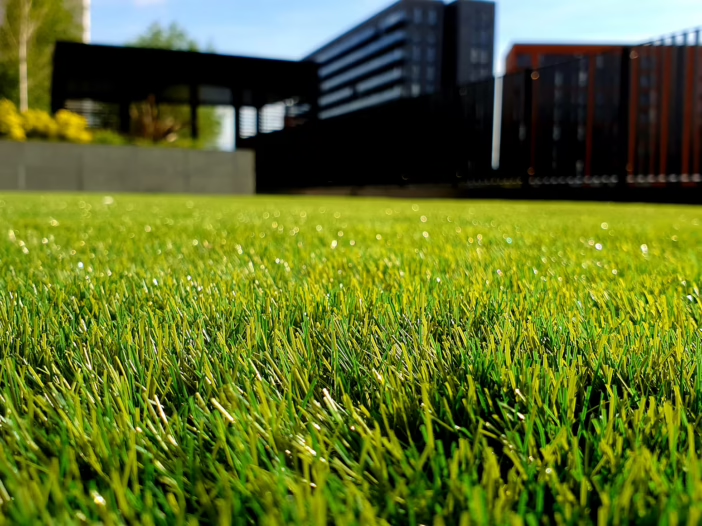
A weekly grass cutting service sounds simple until you start comparing options. Some crews show up on a different day every week, and others cut the lawn so short it browns out by July. If you live in Montgomery County, Bucks County or the surrounding Philadelphia suburbs, the right provider keeps your lawn thick and tidy from the first cut of spring to the last cut of fall. This guide covers what a good service includes, how professionals choose cutting height and frequency, and how they know when it’s time to stop mowing for the year.
Key Takeaways
- A good weekly grass cutting service mows, trims, clears clippings and debris, and leaves the property tidy every visit.
- Penn State Extension recommends mowing most lawns at 2 inches or above and never removing more than one-third of the plant in a single cut.
- Frequency should follow how fast the grass is growing, not just the calendar. Spring often needs more attention, and dry spells may need less.
- A good crew stops mowing in the fall when the grass stops growing, not on a fixed date. The last few cuts matter as much as the first.
- Ask about scheduling, cleanup, add-on services and how quotes are built before you sign up.
What Should a Weekly Grass Cutting Service Include?
At a minimum, a weekly grass cutting service should mow at the right height for the season, trim around edges and obstacles, clear clippings and debris from walkways and driveways, and leave the property tidy before the crew drives away. Anything less is a mow-and-go.
Here’s how we describe the standard on our own residential maintenance page: crews arrive at a convenient time each week, and the work is finished when “every single blade of grass is trimmed, all weeds are whacked, and all lawn waste is removed.”
Many properties also benefit from services beyond mowing, such as fertilization, weed control, aeration and overseeding, bed maintenance, and spring and fall cleanups. A provider that offers them under one roof means one crew and one point of contact.
How Short Should a Good Crew Cut Your Grass?
Penn State Extension advises mowing most lawns at 2 inches or above, and it recommends raising the height to three inches or more in summer. Taller turf grows deeper roots and shades the soil, which helps it handle heat and drought and makes it harder for weed seeds to sprout.
Penn State also calls the “one-third rule” a good rule of thumb: never mow off more than one-third of the plant at once. If a rainy week lets the lawn get away from you, a careful crew brings it down in stages instead of scalping it in one pass.
Blade condition matters just as much as height. Penn State puts it plainly: dull mower blades damage the turf, so blades should be kept sharp. When you interview a provider, ask how often they sharpen.
Does the Type of Mower Matter?
It can, but less than how well the mower is maintained. Reel mowers shear grass against a fixed bar and produce short, even lawns, though tall grass tends to get bent flat instead of cut. Rotary mowers use spinning blades. Whatever the machine, the questions are the same: is the blade sharp, is the cutting height set correctly, and does the crew adjust for conditions?
How Often Should a Grass Cutting Service Visit?
Weekly is the standard through the growing season, but the real answer follows the grass. Penn State notes that cutting should track the growth rate: you may need to mow more than once a week during spring growth peaks, while a drought can mean skipping cuts until growth resumes after rain.
Clippings are worth a quick conversation, too. According to Penn State research on recycling clippings, returned clippings contained 46 to 59 percent of the nitrogen applied as fertilizer, and clippings do not contribute to thatch. The exception is heavy clumps after a wet spell, which are better removed once dry. Ask any provider what their approach is.
When Does a Good Crew Stop Cutting in the Fall?
There’s no single calendar date. A good crew stops mowing when the grass stops growing, which in our area happens as cool fall weather slows the lawn to a crawl.
Cool-season grasses grow leaves best between 60°F and 75°F, and roots work best when the soil is between 50°F and 65°F. As temperatures drop, top growth slows, but fall is also a peak time for root growth, new shoot formation and carbohydrate storage.
Here is what a careful crew does in those last weeks:
- Keeps cutting while the grass is growing. Mowing until growth stops helps reduce snow mold and winter damage, and heavy leaf drop can call for a few extra passes to mulch or lift the leaves off the lawn.
- Steps the height down gradually. If you have been mowing at three inches or more over the summer, the height should come down over several cuts, not in one final scalp. Cutting too short before winter can stress the grass more than it helps.
- Clears the leaves. Our maintenance page puts it plainly: “Heavy layers of leaves left over the winter can induce or encourage growth of bacteria.” That is why our fall cleanups blow and remove leaves and twigs. Our guides to fall lawn care tips and a fall clean-up checklist cover the rest of the season.
A useful question to ask any provider is, “How do you decide when the season is over?” A good answer is “when the grass stops growing.” A fixed date on the calendar is a red flag.
How Do You Compare Quotes From Different Providers?
Start with what is actually included, then look at reliability and how pricing is set. A low price can hide missing cleanup, skipped trimming or an unpredictable schedule.
- Scheduling: Does the crew come the same day each week? What happens after a rainy week?
- Scope: Is trimming, blowing off hard surfaces and waste removal included in every visit?
- Add-ons: Can fertilization, weed control, aeration and overseeding, or fall cleanup be added to the same plan?
- Communication: Can you check invoices and scheduling online? Our clients use a Client Hub for scheduling, invoices and bill pay.
- Pricing: Reputable providers explain what drives the quote. Lot size, slope, fences and obstacles, how often you want service, and add-ons all play a role. Be wary of a number quoted without anyone seeing the property.
FAQ
How often should a grass cutting service mow my lawn?
Weekly is the standard during the growing season. Penn State Extension notes that frequency should follow growth, so a spring surge can call for more attention and a drought can mean skipped cuts.
When is the last mow of the year in Pennsylvania?
There is no set date. Keep mowing until the grass stops growing, and lower the height gradually over several cuts if you have been mowing tall.
Should grass clippings stay on the lawn?
Usually, yes. Clippings return nutrients and do not cause thatch, according to Penn State. Heavy clumps after a wet period should be removed once dry.
What affects the cost of a weekly grass cutting service?
Lot size, terrain, obstacles, service frequency and add-ons all affect the quote. A free, on-site consultation is the most reliable way to get a price for your property.
Talk With a Local Crew About Your Lawn
Raymond Landscaping & Lawn is a family-owned company based in Trappe, founded by Josh Raymond in 2009. We take care of lawns across Montgomery County, Bucks County, suburban Philadelphia and the greater Southeast Pennsylvania region.
If you want a weekly grass cutting service that shows up on schedule, finishes the job and gives you a clear quote up front, request your free consultation! You can also call us at (267) 385-5634 or email raymond@raymondlawnservice.com.
Leave a Reply